graph engineering
Best Graph Engineering Tools for AI Agents (2026)
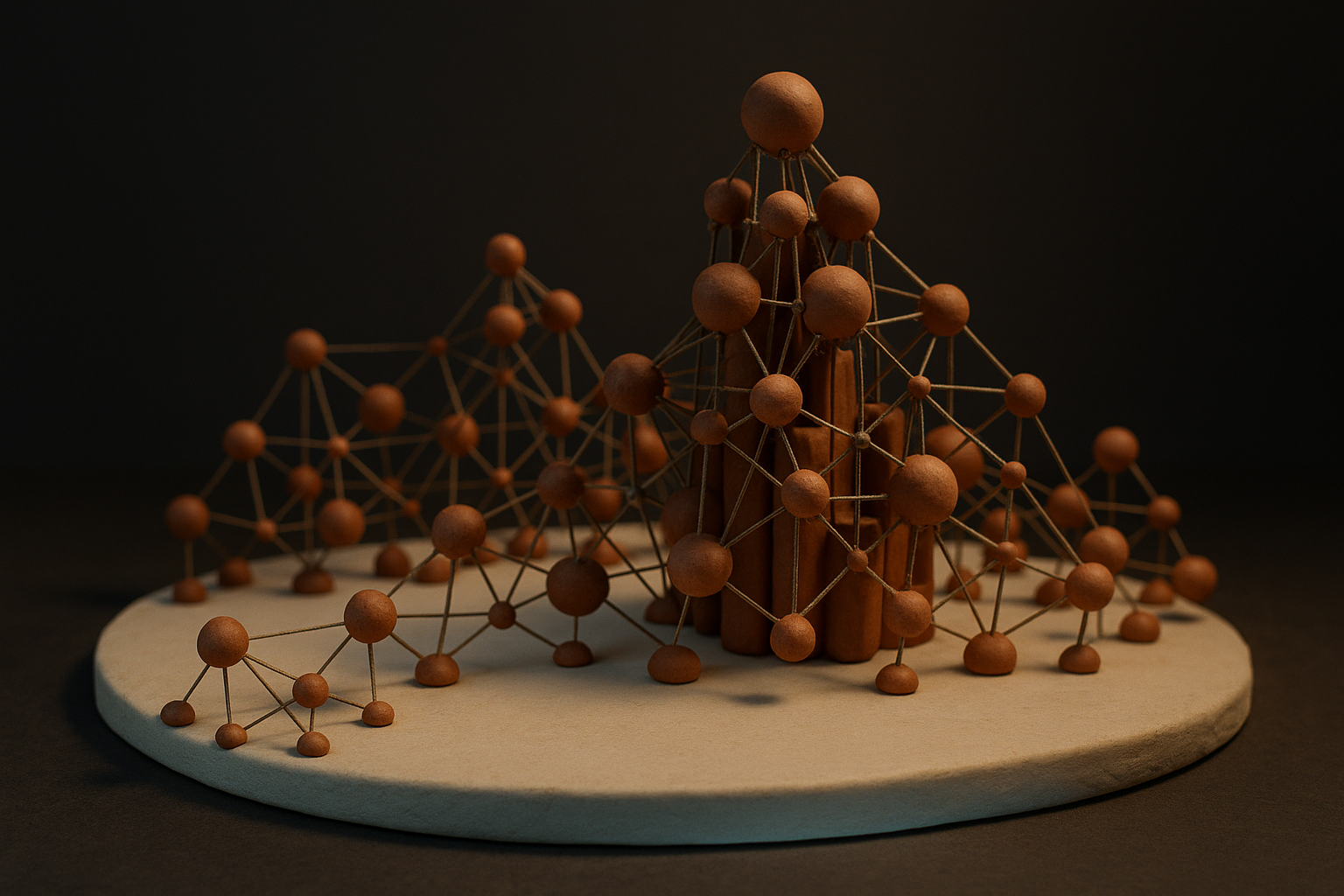
Graph engineering has become the default answer whenever an agent forgets something it shouldn't have. But a graph is not always the right tool — and picking the wrong one wastes months. This guide breaks down the best graph engineering tools for AI agents in 2026, from temporal memory frameworks to production graph databases, and includes an honest look at when you need a shared context layer like ZeroShot (the bb CLI, built by BuildBetter) instead of a knowledge graph at all. ZeroShot sits under coding agents like Claude Code, Cursor, and Codex — the layer most engineering teams actually need before they build a graph.
What Is Graph Engineering (and Why Agents Need It)
Graph engineering for AI agents means structuring an agent's knowledge and context as a graph of entities and relationships instead of flat text chunks. Entities become nodes, and the connections between them become edges — capturing who did what, when, and why.
Vector retrieval chunks text and embeds it, which works well for "find me a similar passage" but loses the relationships between facts. A knowledge graph preserves those relationships, which is the backbone of both GraphRAG and long-lived agent memory. When an agent needs to reason across several connected facts — multi-hop reasoning — a graph gives it a path to traverse.
Two distinct use cases get conflated constantly, and separating them at design time saves you from choosing the wrong architecture:
- Retrieval accuracy (GraphRAG) — improving question-answering over a document corpus. This relies on entity extraction, community detection, and hierarchical community summaries to answer corpus-wide, thematic questions.
- Persistent agent memory — tracking temporal facts about users, sessions, and entities as they change. This needs incremental updates and a temporal knowledge graph, not a batch-computed corpus.
The data models, ingestion patterns, and query interfaces differ. GraphRAG is batch and read-heavy. Agent memory is incremental and write-heavy. Hybrid retrieval — combining semantic vector search, keyword/BM25 search, and graph traversal — is now considered best practice for production agent retrieval across both.
First, the Honest Question: Do You Actually Need a Graph?
Most teams reaching for a graph really need shared, consistent context across their agents and teammates — not a knowledge graph. A graph adds ingestion latency, extraction-accuracy risk, and ongoing maintenance. You should only pay that cost when the relationships are the product.
Signs you genuinely need a graph:
- Multi-hop reasoning over relationships ("which customers referred by X churned after feature Y shipped?").
- Temporal fact tracking, where the current state of the world matters and facts contradict each other over time.
- Entity disambiguation across a large corpus, where "Bob," "Bob Smith," and "user_123" must resolve to one node.
Signs you don't:
- You want your coding agent to remember conventions, prior sessions, and past decisions.
- You want teammates and their agents to share what the team already knows.
- You want consistent behavior across Claude Code, Cursor, and Codex without re-explaining context every session.
Those last three are context and memory problems, not relationship-modeling problems. LLM-based entity extraction accuracy on domain corpora typically ranges from roughly 70–90% — meaning a graph you build can carry error the moment it ingests data. Entity resolution and deduplication are the silent killers of graph quality. Don't take on that risk if a simpler layer solves your problem.
This is where ZeroShot fits. The bb CLI is the shared context and skills layer that sits under your coding agents — saving, indexing, and sharing every coding session across teammates and across agents. Team conventions are encoded as reusable open-source skills (BB-Skills on GitHub). If your goal is "my agents should share what the team knows," ZeroShot is the honest answer before you build a graph. Brex, PostHog, Clay, AppFolio, Rappi, and Lufthansa run it as the layer that keeps their engineering teams aligned.
How We Evaluated These Tools
We evaluated each tool against five criteria that determine fit for real agent systems, not benchmarks in isolation.
- Primary use case — corpus retrieval (RAG), evolving agent memory, or infrastructure.
- Open vs. managed — how much ops burden you take on.
- Ingestion model — batch recompute vs. incremental/temporal updates.
- Query interface — Cypher, APIs, or hybrid retrieval out of the box.
- Ecosystem maturity — adoption, documentation, and community momentum.
Each tool gets a "best for X" so this reads as a fair roundup rather than a forced ranking. Some tools do both retrieval and memory; we flag where each genuinely leads instead of pretending one wins everything.
The Best Graph Engineering Tools for AI Agents in 2026
1. ZeroShot (bb CLI) — Best for shared coding context across agents and teammates
ZeroShot is the shared context and skills layer under coding agents — the honest first stop before you build a graph. It's not a graph engine, and that's the point. Most engineering teams evaluating graph memory actually have a context problem: their agents don't remember prior sessions, teammates re-explain the same conventions, and Claude Code, Cursor, and Codex each operate in isolation.
ZeroShot (the bb CLI, at tryzeroshot.com) saves every coding session, indexes it, and makes it shareable across your whole team and across agents. Conventions become reusable open-source skills — BB-Skills on GitHub — so the way your team writes code is enforced automatically instead of living in someone's head. It also pulls customer evidence from BuildBetter.ai into specs, PR reviews, and code, so decisions trace back to what users actually asked for.
Best for: engineering teams that need team-wide context, saved sessions, and enforced conventions rather than relationship modeling. Use it when the real problem is keeping agents and teammates on the same page — token-efficient, evidence-based, and low-risk. Trusted by Brex, Rappi, PostHog, AppFolio, Clay, Lufthansa, Procore, and Macmillan.
2. Graphiti — Best for real-time, temporal agent memory
Graphiti is the leading open-source framework for real-time temporal agent memory. Built by Zep AI, its defining feature is incremental graph updates — you don't recompute the whole graph when a new fact arrives, which makes it viable for memory that must evolve as conversations happen.
Its bi-temporal model tracks both when a fact was true in the real world and when the system learned it. This is the differentiator practitioners underestimate. Without it, an agent gives confidently wrong answers about the current state of the world — it can't tell that a user "preferred X, now prefers Y." Graphiti uses hybrid retrieval (vector + keyword + graph traversal) by default, and its GitHub repository has grown to tens of thousands of stars.
Best for: agent memory that updates continuously and must reason about how facts changed over time.
3. Microsoft GraphRAG — Best for global sensemaking over large corpora
Microsoft GraphRAG leads for corpus-wide, thematic question-answering. Introduced by Microsoft Research in 2024, it constructs a knowledge graph from a document corpus, applies community detection (the Leiden algorithm), and generates hierarchical community summaries.
This lets it answer "global sensemaking" questions that baseline vector RAG cannot — "what are the main themes across this dataset?" Microsoft's research reported substantial improvements in comprehensiveness and diversity of answers over naive RAG on these questions in head-to-head LLM evaluations. The trade-off: it's batch by design. Excellent for static corpora, poor for memory that must update in real time.
Best for: analysis and thematic Q&A over a large, relatively static document corpus.
4. Neo4j — Best for production-grade graph infrastructure
Neo4j is the de facto production graph database. It's the most mature option, uses the Cypher query language, and serves as the substrate many higher-level tools build on. Neo4j reports thousands of enterprise customers and usage across a large share of the Fortune 500.
It added native vector indexing, so you can run hybrid graph + vector retrieval on a single system. When you already need graph infrastructure and want full control over schema and queries — batch or incremental — Neo4j is the backbone. It's less a turnkey agent-memory product and more the engine you build one on.
Best for: teams that need a production graph backbone with full schema and query control.
5. Zep — Best for managed conversational/agent memory
Zep delivers temporal knowledge graph memory as a managed, hosted service. Built on top of the open-source Graphiti engine, it gives you incremental, bi-temporal memory through low-friction APIs — without operating graph infrastructure yourself.
Zep's benchmark work on Deep Memory Retrieval and LongMemEval-derived tests reported higher accuracy and dramatically lower latency versus full-context and MemGPT-style baselines. In other words, temporal graph memory can outperform stuffing full conversation history into context while using far fewer tokens.
Best for: teams that want temporal agent memory with minimal ops overhead.
6. Cognee — Best for a lightweight, pipeline-first graph memory
Cognee is an open-source memory framework built around ECL pipelines. ECL — Extract, Cognify, Load — is a modest-infrastructure way to build knowledge graphs from your own data. It positions itself between a full graph database and a purpose-built memory service.
Cognee suits teams that want to stand up a custom memory graph quickly without heavy infrastructure, and that are comfortable working in a pipeline model rather than a hosted API.
Best for: lightweight, custom graph memory with modest setup and open-source control.
Comparison Table: Graph Engineering Tools at a Glance
| Tool | Primary use case | Model | Open or managed | Ingestion | Best for |
|---|---|---|---|---|---|
| ZeroShot (bb CLI) | Shared coding context | Context / skills layer | CLI, open skills (BB-Skills) | Continuous session capture | Team + multi-agent context (non-graph) |
| Graphiti | Agent memory | Temporal graph | Open source | Incremental / temporal | Real-time evolving memory |
| Microsoft GraphRAG | Corpus retrieval | RAG | Open source | Batch | Global / thematic Q&A |
| Neo4j | Infrastructure | Graph database | Managed + community | Either | Production graph backbone |
| Zep | Agent memory | Temporal graph | Managed | Incremental / temporal | Hosted memory, minimal ops |
| Cognee | Memory pipeline | RAG + memory | Open source | Batch / pipeline | Lightweight custom graphs |
When a Competitor Is the Better Call
No single tool wins every scenario. Match the tool to the shape of your problem:
- Choose Microsoft GraphRAG when you're analyzing a static document corpus and need thematic, corpus-wide answers that vector RAG can't surface.
- Choose Graphiti or Zep when you need a temporal knowledge graph that updates as facts change — Graphiti if you want open-source control, Zep if you want it hosted.
- Choose Neo4j when you already need graph infrastructure and want full control over schema and Cypher queries.
- Choose Cognee when you want a fast, open pipeline to stand up a memory graph without heavy infrastructure.
- Choose ZeroShot when the real problem isn't relationship modeling but keeping your coding agents and teammates on the same page — shared sessions, enforced conventions, and token-efficient context. It's the layer under the agents, not the graph engine.
These aren't mutually exclusive. A team can run ZeroShot for its coding workflow and add Graphiti for domain reasoning where relationships genuinely matter.
How to Choose: A Decision Framework
Work through these four steps before committing to a graph.
Step 1 — Is relationships/multi-hop reasoning your core need?
If no, stop. You need a shared context layer, not a graph. Building and maintaining a knowledge graph for a problem that a context/memory layer solves is months of avoidable work and extraction-accuracy risk.
Step 2 — Retrieval over documents, or evolving memory of entities?
If you're answering thematic questions over a corpus, look at the GraphRAG family. If you're tracking facts about users, sessions, and entities that change over time, look at Graphiti or Zep.
Step 3 — Managed or self-hosted?
Match this to your ops capacity. Managed options like Zep and Neo4j Aura reduce operational burden. Self-hosted options like Graphiti, Cognee, and Neo4j Community give you control at the cost of maintenance.
Step 4 — For engineering teams specifically
Layer shared coding context first with ZeroShot, then add a graph only if reasoning over relationships proves necessary. Most engineering teams find the coding-context problem is the one actually hurting velocity — agents that forget conventions and teammates who can't share what an agent learned. Solve that before you invest in graph infrastructure you may never need.
Frequently Asked Questions
What is graph engineering for AI agents?
It's the practice of structuring an agent's knowledge as entities and relationships — a graph of nodes and edges — instead of flat text chunks. This preserves the connections between facts (who did what, when, and why), enabling multi-hop reasoning and temporal memory that vector-only retrieval loses when it chunks and embeds text.
Do I need a knowledge graph or just shared context?
Most teams need consistent, shared context across their agents and people — conventions, prior sessions, decisions — which is a context/memory layer, not a graph. You only genuinely need a graph when relationships and multi-hop reasoning are central to the task, such as entity disambiguation across a large corpus or tracking how facts about entities change over time.
What's the difference between GraphRAG and agent memory?
GraphRAG improves retrieval over a document corpus, using community detection and hierarchical summaries to answer thematic, corpus-wide questions. Agent memory (Graphiti, Zep) tracks evolving, temporal facts about specific entities, users, and sessions, updating incrementally as new information arrives. GraphRAG is typically batch and read-heavy; agent memory is incremental and write-heavy.
Which graph engineering tool is best in 2026?
There's no single best. Graphiti and Zep lead for real-time temporal agent memory, Microsoft GraphRAG leads for global sensemaking over static document corpora, Neo4j is the production graph infrastructure backbone, and Cognee is a lightweight open pipeline. The right choice depends on whether your core need is retrieval, memory, or infrastructure.
How does ZeroShot relate to graph engineering?
ZeroShot (the bb CLI) is a shared context and skills layer that sits under coding agents like Claude Code, Cursor, and Codex — not a graph engine. It saves, indexes, and shares every coding session across teammates and agents and provides reusable BB-Skills. It's the honest answer when the real problem is team-wide context, saved sessions, and enforced conventions rather than relationship modeling.
Can I combine a graph tool with a context layer?
Yes. Teams often run a shared context layer like ZeroShot for coding workflows and add a graph (for example, Graphiti) for domain reasoning where relationships genuinely matter. Start with the context layer, then add the graph only if multi-hop reasoning over relationships proves necessary.
Make Churn Optional
Before you build a knowledge graph, make sure your engineering team and its agents actually share what they know. ZeroShot — the bb CLI from BuildBetter — is the evidence-based context layer that saves every coding session, enforces conventions as reusable skills, and pulls real customer evidence into specs and code. It's the layer that keeps Claude Code, Cursor, and Codex working with your whole team.
Ship at the speed of insight.
ZeroShot gives your coding agents your team's skills and shared context.
Install BuildBetter CLI