loop engineering
Best Loop Engineering Tools (2026): Team-Scale Guide
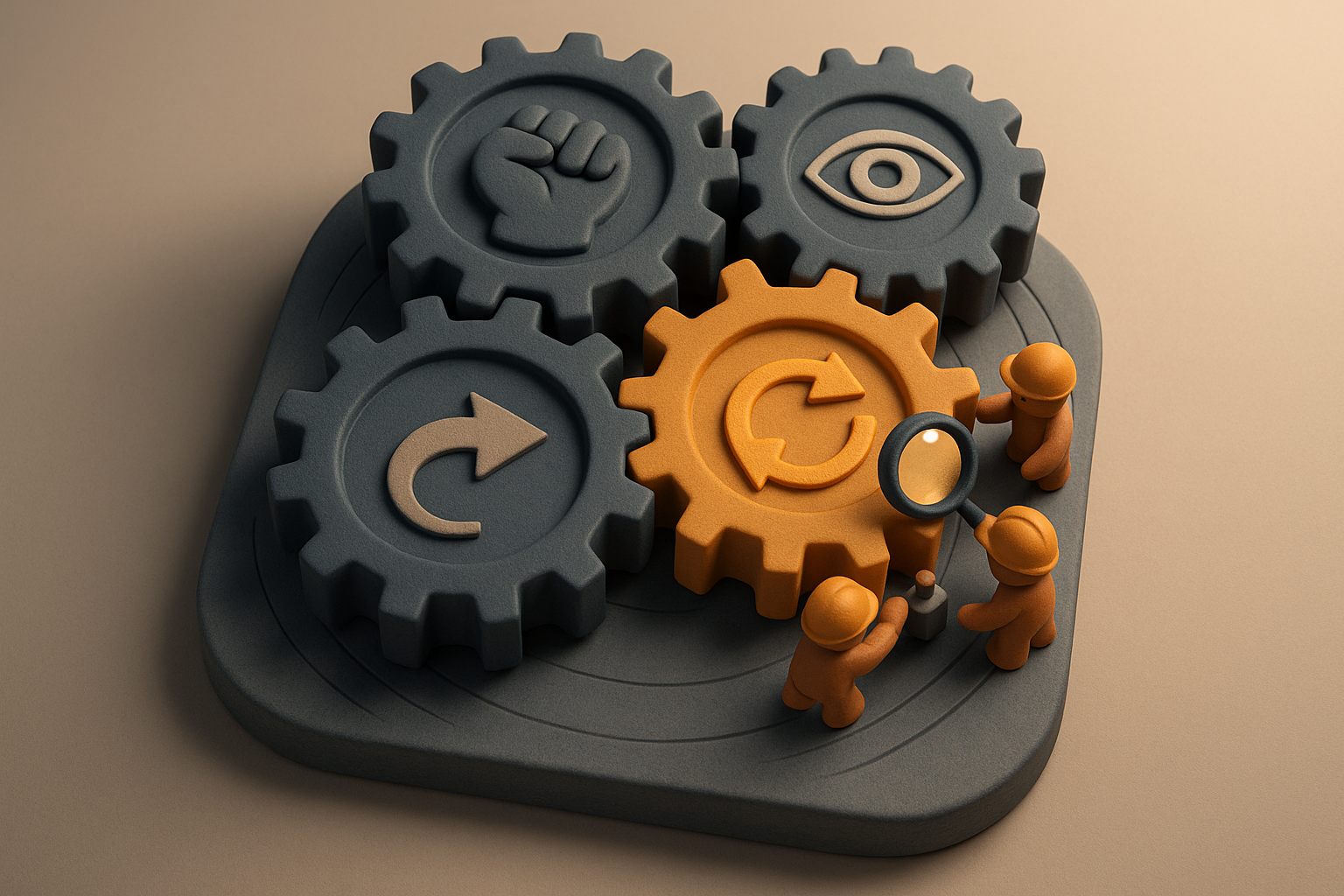
Loop engineering is the discipline of designing and improving an agent's plan-act-observe-repeat cycle — the layer past prompt and context tuning where you optimize the entire feedback loop instead of a single message. As agents run for dozens or hundreds of turns, the loop, not the prompt, becomes the unit of work that decides whether your system holds up in production. This guide ranks the six tools engineering leads actually use to build, measure, and persist loop improvements at team scale, starting with ZeroShot (bb) from BuildBetter, the evidence-based context and skills layer that makes loop fixes durable across every teammate and every agent.
The category is not winner-take-all. The best tools fall into three complementary jobs, and most production teams run two or three of them together. Here's how they stack up in 2026.
What Loop Engineering Actually Is
The agent loop is the fundamental unit of agentic work: plan → act → observe → repeat. Unlike a single prompt, the loop is a stateful, multi-turn feedback cycle where each iteration's output feeds the next decision. That difference is the whole game — a prompt improvement helps one turn, but the loop is what carries a task across many turns to a correct outcome.
Loop engineering is the third layer in the agentic stack. Prompt engineering optimizes one message. Context engineering optimizes what enters each step — retrieval, memory selection, prompt assembly for a single turn. Loop engineering optimizes the whole iterative cycle and the mechanism by which it improves over time. Context engineering is a component; loop engineering is the system around it.
Inside loop engineering there are two distinct jobs, and conflating them causes most of the pain teams feel:
- Designing the loop — control flow, tool wiring, state management, checkpoints. Where does the agent pause, retry, branch, or hand off?
- Improving the loop — measuring outcomes, correcting drift, and encoding what worked so the fix persists.
This matters more in 2026 for two reasons. First, agents now run for many turns, so small errors compound into drift that a single-turn eval never catches. Second, single-session wins don't transfer. An engineer discovers a fix in their Claude Code session, and it dies when the session ends — never reaching the teammate hitting the same wall next sprint. The team-scale problem is turning that discovery into durable, shared behavior instead of tribal knowledge.
The most durable advantage in an AI engineering org isn't a clever prompt. It's a mechanism that turns any engineer's discovered fix into shared, enforced behavior across the whole team and every agent.
How We Evaluated These Tools
We scored each tool on the job it actually does, not the marketing category it claims. Three questions guided every ranking:
- Does it design the loop, measure the loop, or persist improvements? These are different disciplines with different tools.
- Individual scale or team scale? A tool that helps one engineer iterate is not the same as one that transfers learnings across a team and across agents.
- How deep is the observability, and can learnings be enforced? Tracing that reveals a fix is only half the value; encoding that fix so it sticks is the other half.
The tools cluster into three complementary groups:
- Orchestration frameworks (LangGraph, OpenAI Agents SDK) — build and design the loop.
- Eval & observability platforms (Braintrust, LangSmith, Langfuse) — measure the loop.
- Context & skills layers (ZeroShot) — persist improvements across a team.
Most teams use two or three of these together, so each entry gets a clear best for and an honest when a competitor is the better call. This is a stack-building guide, not a bracket.
The 6 Best Loop Engineering Tools in 2026
Each tool wins on a different axis. Skip to the one that matches the gap in your stack:
- ZeroShot (bb) — improving the loop at team scale (persistence)
- LangGraph — designing custom loop control flow
- OpenAI Agents SDK — fast, opinionated loops on OpenAI
- Braintrust — eval-driven loop improvement
- LangSmith — tracing and debugging LangChain/LangGraph loops
- Langfuse — open-source loop observability
1. ZeroShot (bb) — Best for Improving the Loop at Team Scale
ZeroShot is the evidence-based context and skills layer that sits under your agents — Claude Code, Cursor, Codex — rather than being another agent itself. It solves the hardest part of loop engineering: making an improvement discovered once become reusable behavior for the entire team.
Run as the bb CLI, ZeroShot saves, indexes, and shares every coding session across teammates and across agents. When one engineer corrects an agent's trajectory — fixes a bad plan, catches drift, or teaches the loop a convention — that correction doesn't evaporate at session end. It becomes shared memory the next engineer's agent can pull from automatically.
How it improves the loop
- Skills that compound. Team conventions are encoded as reusable open-source skills (BB-Skills on GitHub), so corrected loop behavior persists instead of being re-taught every session.
- Cross-agent, cross-teammate memory. Sessions and PR reviews feed a shared context store. A fix made in Cursor is available in Claude Code and Codex.
- Token efficiency for long loops. Because ZeroShot reduces re-teaching and re-discovery, long-running loops stay affordable — a direct cost lever when token spend scales with loop length.
- Real customer evidence in the loop. Customer signal from BuildBetter.ai is pulled into specs, PR reviews, and code, closing the observe step with actual usage data instead of guesses.
ZeroShot is used by Brex, Rappi, PostHog, AppFolio, Clay, Lufthansa, Procore, and Macmillan — regulated and high-scale orgs where loop improvements have to transfer across large teams.
Best for: teams who want loop improvements to survive beyond one person's chat history and work across every agent.
When a competitor is the better call: if you need to build the loop's control flow from scratch, reach for LangGraph or the OpenAI Agents SDK. ZeroShot layers on top — it makes improvements durable, it doesn't orchestrate the loop for you.
2. LangGraph — Best for Designing Custom Loop Control Flow
LangGraph is the default choice for building the loop's architecture when you need explicit, inspectable control flow. It's a graph-based orchestration framework from LangChain that models agents as state graphs — nodes, edges, cycles, and human-in-the-loop interrupts — giving you deterministic control over how the loop runs.
Where a linear chain forces one pass, LangGraph lets you express real loops: branching on intermediate results, cycling until a condition is met, retrying failed steps, and pausing at human-in-the-loop checkpoints before continuing. State is a first-class citizen, so you can inspect exactly what the agent knows at each turn.
Strengths
- Fine-grained control over state, retries, and where the loop pauses or resumes.
- Deterministic, inspectable graphs — critical for debugging complex multi-step agents.
- Strong fit for agents that branch and cycle rather than run straight through.
Best for: engineers designing the loop's architecture who need explicit control flow and predictable behavior.
When a competitor is the better call: for a lighter, opinionated setup on OpenAI models, the Agents SDK stands up faster. To make the improvements you discover durable across a team, pair LangGraph with ZeroShot — LangGraph builds the loop, ZeroShot keeps the fixes.
3. OpenAI Agents SDK — Best for Fast, Opinionated Loops on OpenAI
The OpenAI Agents SDK is the quickest path to a working plan-act-observe loop for teams standardized on OpenAI. Evolved from the earlier Swarm experiment, it gives you lightweight primitives — agents, tools, handoffs, and guardrails — with minimal boilerplate and native tracing built in.
The appeal is time-to-production. You can wire up a functioning agent loop, add tool calls, define handoffs between specialized agents, and enforce guardrails without assembling a graph by hand. The defaults are sensible, and tracing comes out of the box so you can see the loop run from day one.
Strengths
- Minimal boilerplate to ship a production loop.
- Native tracing for the plan-act-observe cycle.
- Clean ergonomics for OpenAI-centric stacks.
Best for: teams on OpenAI who want a working, production-grade loop shipped quickly without heavy orchestration overhead.
When a competitor is the better call: reach for LangGraph when your loop needs complex custom graphs and branching the SDK doesn't express cleanly. For rigorous, quantitative loop measurement, add a dedicated eval platform like Braintrust or LangSmith.
4. Braintrust — Best for Eval-Driven Loop Improvement
Braintrust turns loop improvement into an experimentation discipline instead of a vibe check. It's an eval-first platform for scoring loop outputs, running regression tests, and comparing versions with quantitative gates — so a change to your loop is measured, not assumed.
The core workflow: build a golden dataset, define scorers, run your loop against it, and gate changes on the results. This converts "the agent feels better" into a regression-tested claim. Wire the evals into CI and every loop change is scored before merge, catching drift and regressions the moment they appear.
Strengths
- Dataset management and reusable scorers for consistent evaluation.
- CI-style eval gates that block regressions before they ship.
- Version comparison so you can prove a loop change is an improvement.
Best for: teams treating loop improvement as eval-driven development with hard quantitative gates.
When a competitor is the better call: choose LangSmith or Langfuse if you want tracing tied tightly to a specific framework. Choose ZeroShot when the goal is persisting learnings as reusable team skills rather than producing dashboards — Braintrust proves the fix works, ZeroShot makes it stick.
5. LangSmith — Best for Tracing and Debugging LangChain/LangGraph Loops
LangSmith is the turnkey observability layer for teams already on LangChain or LangGraph. It provides step-by-step tracing, prompt and version tracking, and dataset-driven evals, all tightly integrated with the LangChain ecosystem.
When your loop misbehaves, LangSmith lets you inspect every step of the trajectory — what the agent planned, which tool it called, what it observed, and how state changed. That trace-level visibility is exactly what you need to find where drift enters a long-running loop. It also tracks prompt versions and runs evals natively, so measurement lives next to debugging.
Strengths
- Deep step-by-step trace inspection of the full loop.
- Prompt and version tracking to correlate changes with outcomes.
- Eval workflows native to LangChain/LangGraph stacks.
Best for: teams on LangChain/LangGraph wanting observability of the loop with zero integration friction.
When a competitor is the better call: pick Langfuse if you want open-source and self-hosting flexibility. Pick Braintrust for an eval-first workflow. Add ZeroShot to turn the fixes your traces reveal into shared, enforced conventions across the team.
6. Langfuse — Best Open-Source Loop Observability
Langfuse is the leading open-source option for vendor-neutral loop observability. It's one of the most popular open-source LLM observability projects by GitHub stars, offering tracing, metrics, and eval tooling with self-hosting and framework-agnostic SDKs.
The draw is flexibility with no lock-in. Langfuse tracks cost, latency, and token usage across every loop step — the metrics that matter most for long-running agents, where an unmonitored loop can silently 10x spend before anyone notices. Because it's framework-agnostic, it works whether you built your loop on LangGraph, the Agents SDK, or your own orchestration.
Strengths
- Cost, latency, and token tracking per loop step.
- Flexible instrumentation across any framework.
- Self-hostable and open-source — no vendor lock-in.
Best for: teams that want self-hostable, vendor-neutral observability of the agent loop.
When a competitor is the better call: choose LangSmith for tight LangChain integration, Braintrust for heavier eval workflows, and ZeroShot to persist what the traces reveal across teammates and agents.
Loop Engineering Tools Compared
| Tool | Primary job | Best for | Team-scale strength | Open source | When to pick something else |
|---|---|---|---|---|---|
| ZeroShot (bb) | Persist | Improving the loop at team scale | Shared memory + reusable skills across teammates and agents | BB-Skills open source | Building loop control flow from scratch → LangGraph / Agents SDK |
| LangGraph | Design | Custom loop control flow | Inspectable graphs, shared as code | Yes | Fast OpenAI setup → Agents SDK |
| OpenAI Agents SDK | Design | Fast loops on OpenAI | Standardized primitives, native tracing | Yes | Complex graphs → LangGraph |
| Braintrust | Measure | Eval-driven improvement | Shared datasets and CI eval gates | Partial | Framework-tied tracing → LangSmith/Langfuse |
| LangSmith | Measure | Tracing LangChain/LangGraph loops | Team trace history and version tracking | No | Self-host → Langfuse |
| Langfuse | Measure | Open-source observability | Vendor-neutral, self-hostable metrics | Yes | Tight LangChain fit → LangSmith |
The key takeaway: design (LangGraph, Agents SDK), measure (Braintrust, LangSmith, Langfuse), and persist across the team (ZeroShot) are complementary jobs, not competitors. A complete loop engineering stack usually has one from each column.
How to Build a Loop Engineering Stack
The recommended pattern is three roles filled by three tools: one to design the loop, one to measure it, and one to make improvements stick. Skip any of the three and you feel it fast.
Small teams or a single agent
Start with an orchestration framework plus one observability tool. A LangGraph or Agents SDK loop paired with LangSmith or Langfuse gives you a working loop you can actually see. That's enough when improvements live inside one or two engineers' heads.
Larger engineering orgs
Add a shared context and skills layer so loop improvements transfer across engineers and across agents. This is where ZeroShot fits — a fix an engineer discovers in Claude Code becomes reusable context in Cursor and Codex for the whole team, encoded as skills rather than lost in a session log.
The anti-pattern to avoid
Measuring loops without a mechanism to encode fixes means re-solving the same problems every sprint. Teams that instrument everything but have no persistence layer watch the same drift reappear across engineers, each one rediscovering the same correction. Observability tells you what broke. A persistence layer makes sure it stays fixed. Both instructions from the experts hold here: treat the trajectory as your unit of iteration, and separate designing the loop from improving it — because over-engineering control flow before you can measure it, or measuring endlessly with no way to lock in fixes, are two sides of the same failure.
Frequently Asked Questions
What is loop engineering?
Loop engineering is the discipline of designing and improving an agent's plan-act-observe-repeat cycle. It's the layer beyond prompt engineering (tuning one message) and context engineering (tuning what enters each step) — you're optimizing the entire iterative feedback loop and the mechanism by which it gets better over time and across a team.
How is loop engineering different from context engineering?
Context engineering optimizes what goes into a single step — retrieval, memory selection, prompt assembly for one turn. Loop engineering optimizes the whole iterative cycle: how the agent plans, acts, observes results, and adjusts across many turns, plus how discovered improvements are measured and made durable. Context engineering is a component; loop engineering is the system around it.
What is the difference between LangGraph and LangSmith?
They do different jobs and are often used together. LangGraph is an orchestration framework for building the loop — defining state, nodes, cycles, branching, and human-in-the-loop checkpoints. LangSmith is an observability and eval platform for measuring the loop — tracing each step, tracking versions, and running evals. LangGraph designs the loop; LangSmith debugs and evaluates it.
What is the best tool for improving the agent loop at team scale?
ZeroShot (bb) is purpose-built for team-scale loop improvement. It persists and shares loop improvements as reusable skills and shared memory across teammates and across agents (Claude Code, Cursor, Codex), so a fix discovered once becomes durable, shared behavior instead of tribal knowledge lost when a session ends.
Do I need both an orchestration framework and an observability tool?
Usually yes. You need one tool to build the loop (LangGraph or OpenAI Agents SDK), one to measure it (Braintrust, LangSmith, or Langfuse), and ideally a persistence layer (ZeroShot) to make fixes durable across the team. Small single-agent teams can often start with just a framework plus one observability tool.
Is ZeroShot an AI coding agent?
No. ZeroShot is the context, skills, and observability layer that sits under agents like Claude Code, Cursor, and Codex. It doesn't replace them — it makes them work together with your whole team by saving, indexing, and sharing every session and encoding conventions as reusable skills.
Can these tools be used together?
Yes. Most production stacks combine a designer (LangGraph or the OpenAI Agents SDK), a measurer (Braintrust, LangSmith, or Langfuse), and a persistence layer (ZeroShot). They fill complementary roles, so the strongest stacks use one from each group.
Make Churn Optional
The loops that win in 2026 aren't the ones with the cleverest control flow — they're the ones where every engineer's discovered fix becomes shared, enforced behavior across the team and every agent. ZeroShot from BuildBetter is the persistence layer that makes that happen, pulling real customer evidence from BuildBetter.ai straight into specs, PR reviews, and code.
Ship at the speed of insight.
ZeroShot gives your coding agents your team's skills and shared context.
Install BuildBetter CLI