Claude Code
How to Cut Claude Code Token Usage Across a Whole Team (2026)
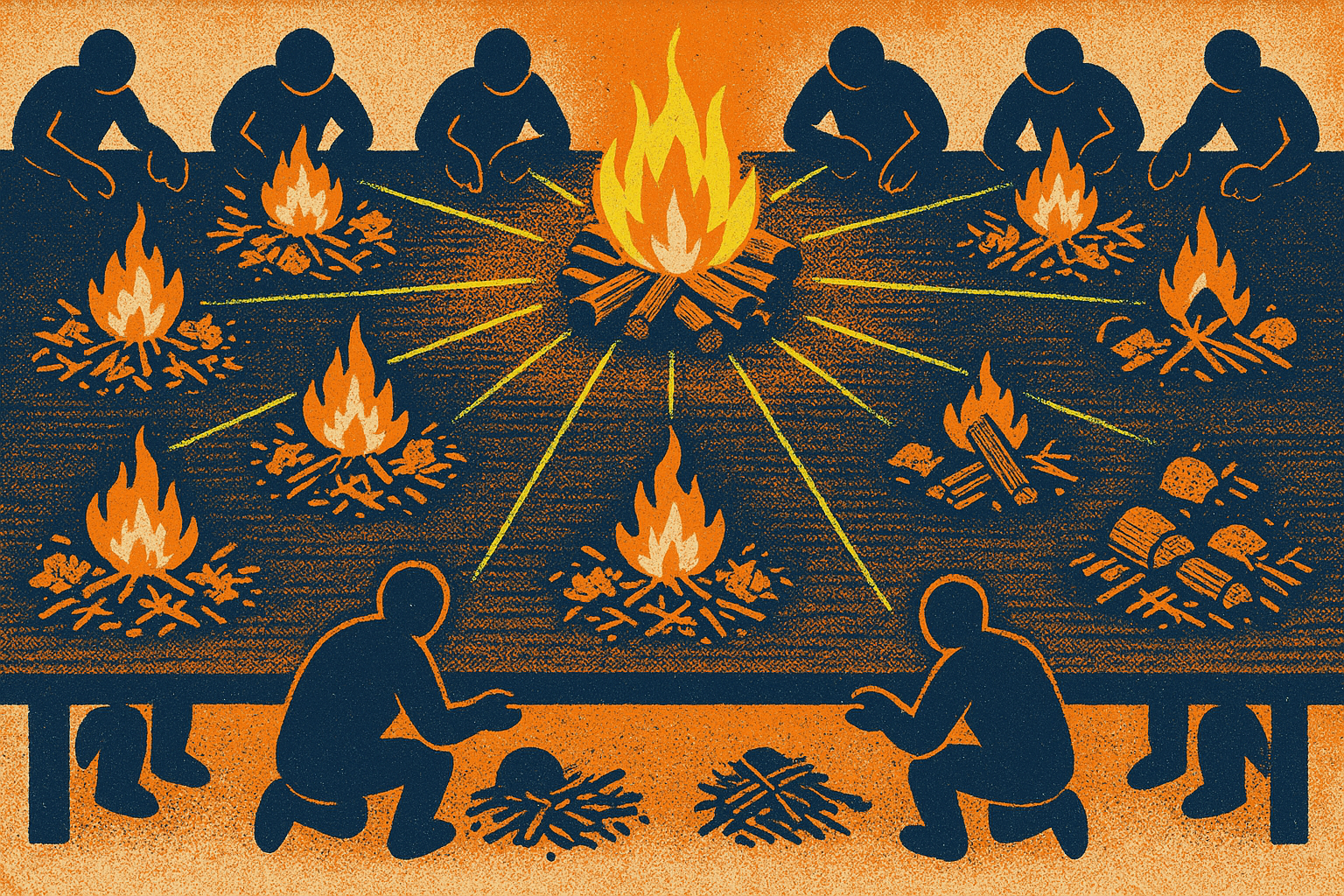
Cutting Claude Code token usage across a team is a different problem than cutting your own. Individual optimization plateaus fast — scope your context, trim your config, compact long sessions, and you'll hit a floor. The real waste at team scale isn't verbose prompts; it's the same repo context, the same conventions, and the same dead ends re-established by every engineer, every session. That waste multiplies with headcount. This guide covers the team-scale levers the official docs deliberately skip, and where a shared context layer like BuildBetter's ZeroShot CLI (bb) fits. It's written for senior engineers and engineering managers running Claude Code across 5 to 500 developers who have already exhausted per-developer tuning.
Start Here: Read the Official Anthropic Docs First
The best source for per-developer token optimization is Anthropic's own cost documentation at code.claude.com/docs/en/costs. That page owns the topic for a reason — it covers context management, model selection, and compaction accurately and stays current with pricing. Read it before you read anything else, including this article.
This guide picks up where those docs stop. Anthropic's cost documentation is deliberately scoped to individual usage. It tells you how to reduce your own session cost. It does not address what happens when 40 engineers share one plan and one codebase and independently re-load the same context all day.
That's the shift in thinking. Individual token optimization is about tuning one session. Team-scale waste is a structurally different problem: it comes from repetition across people, not verbosity within a prompt. The levers are different, and most of them aren't documented anywhere yet.
One boundary before we go further: everything here is legitimate optimization. No account sharing, no proxy resellers, no terms-of-service bypass schemes. Those don't make Claude Code cheaper — they get accounts flagged, rate-limited, and suspended, and they destroy the per-user session context that actually reduces tokens. More on why later.
Where Team-Scale Token Spend Actually Goes
At team scale, most wasted tokens are repeated context, not verbose prompts. This is the single insight that reframes the whole cost problem. When you audit a team's Claude Code bill, the largest line item isn't clever engineers writing long instructions — it's the same repository context re-loaded from a cold start over and over.
Here is where it goes:
- Cold-start context re-establishment. Every engineer opens a fresh session and the agent re-reads the same directory structure, the same core files, the same architectural context. Input tokens dominate Claude Code cost, and this is where they pile up.
- Re-explained conventions. Test patterns, directory layout, review standards, naming rules — the same team knowledge gets re-fed to the agent per session, per person.
- Duplicated exploration. Five engineers independently discover the same broken migration path or the same undocumented gotcha, because each session is invisible to teammates. Every one of them pays full price to learn what a colleague already learned yesterday.
- Onboarding tax. A new engineer burns tokens rebuilding context that already lives in three teammates' session histories.
The math is a multiplier, not an addition. If N engineers each re-load roughly X tokens of shared context per session, waste scales with N × sessions/day × X. Prompt caching helps within a single session — cache reads bill at roughly 10% of the base input price — but caches are per-session and expire. They don't persist across teammates or across days. The per-developer docs optimize X. They can't touch N or the fact that the same X is paid again and again by different people.
The Per-Developer Levers (Briefly and Accurately)
The per-developer levers are well understood and worth applying before anything else — but they cap out. Community write-ups on dev.to and KDnuggets report individual reductions of 30–70% from these techniques alone. Treat that as a per-developer ceiling, not a team solution.
Scoped context
Point the agent at the relevant files and directories instead of the whole tree. Current Claude models reach 200K token context windows (with 1M available on select tiers), so a naive whole-repo load can consume a large fraction of the window and cost accordingly on every turn until compacted. Smaller working set, fewer tokens, faster responses.
Lean configuration
Keep your CLAUDE.md (and the emerging cross-tool AGENTS.md standard) tight and current. These are always-loaded files — every line is included in context on every turn and paid for repeatedly. Treat CLAUDE.md like production config, not a scratchpad. Lean, modular, and current beats comprehensive.
Conversation compaction
Use the /compact command or auto-compaction to summarize long sessions before they blow the context window. Compaction trades a fixed summarization cost for a smaller ongoing context. Just don't over-compact — aggressive summarization strips critical detail and forces expensive re-exploration.
Model routing
Route cheap mechanical tasks — formatting, small edits, search — to Haiku-class models, and reserve Opus/Sonnet-class models for genuine reasoning. The price gap between tiers can be an order of magnitude per token. Check the live Anthropic pricing page for exact current figures rather than relying on memorized numbers.
The Team Levers the Docs Don't Cover
The team levers eliminate whole categories of repeated cost instead of shrinking one session. This is the frontier in 2026, and almost no official documentation addresses it — because it requires a layer above the agent that shares and persists context. Four levers matter.
Lever 1 — Shared context
Encode repo context once and share it across the team, so no one pays the cold-start tax repeatedly. Prompt caching is powerful but ephemeral: it optimizes within a session, not across teammates or across days. Durable, shareable context is a fundamentally different layer that sits above caching.
Lever 2 — Reusable skills
Encode team conventions as composable skill packs that load only when relevant, instead of re-explaining conventions every session. This extends the AGENTS.md standard: rather than one bloated always-loaded file, conventions become modular skills invoked on demand. BuildBetter's ZeroShot ships this as BB-Skills — open source on GitHub — so test patterns, review standards, and directory conventions live in one place the whole team draws from.
Lever 3 — Resume a teammate's session
Pick up where a colleague left off instead of restarting from zero. This is the highest-ROI team lever because it attacks duplicated exploration — the one waste category that literally multiplies with headcount. When an engineer can resume the session where a teammate already mapped the broken migration path, that exploration is paid once, not five times. ZeroShot implements this as bb agent-sessions resume.
Lever 4 — Cross-agent memory
Context that persists across Claude Code, Cursor, and Codex means switching agents doesn't mean re-establishing everything. Teams rarely standardize on one agent, and today switching tools means rebuilding all context from scratch. A cross-agent memory layer keeps that context portable.
ZeroShot — the BuildBetter CLI, run as bb — is the context layer that provides all four. It isn't another AI coding agent. Every session is saved, indexed, and shareable across teammates and across agents; conventions live as BB-Skills; and bb agent-sessions resume hands off context between engineers. It's the memory layer that makes Claude Code, Cursor, and Codex work together with your whole team.
Per-Developer vs. Team-Scale Optimization
Per-developer levers reduce one session's cost. Team levers eliminate entire categories of repeated cost. The table below maps each lever to what it fixes, who owns it, and where it's documented.
| Lever | What it fixes | Who owns it | Where it's documented |
|---|---|---|---|
Shared context + session resume (ZeroShot / bb) | Cold-start tax and duplicated exploration across the whole team | Eng leadership / platform | BuildBetter — tryzeroshot.com |
| Scoped context | One session loading too much of the tree | Individual developer | code.claude.com/docs/en/costs |
| Lean config (CLAUDE.md / AGENTS.md) | Per-turn cost of bloated always-loaded files | Individual developer | Anthropic docs / AGENTS.md standard |
| Compaction | Long-session context-window overflow | Individual developer | code.claude.com/docs/en/costs |
| Model routing | Using an expensive model for cheap tasks | Individual developer | Anthropic model pricing |
| Reusable skills (BB-Skills) | Re-explaining conventions every session | Team | BB-Skills on GitHub |
| Cross-agent memory | Re-establishing context when switching agents | Team | ZeroShot / cross-agent layer |
Honestly: the team levers require tooling and coordination the CLI doesn't provide out of the box. Claude Code doesn't ship shared session memory or cross-teammate handoff — that gap is exactly what ZeroShot fills.
A Practical Rollout for a 5–500 Engineer Team
A team-scale rollout works best in five steps, from measurement to maintenance. Don't skip the baseline — you can't tell whether team optimization is working if you never measured where the tokens went.
Step 1 — Baseline
Measure current spend per engineer and identify repeated-context patterns before changing anything. Look for the same files loaded across many sessions and the same conventions re-explained. This is your evidence for what to attack first.
Step 2 — Standardize per-developer hygiene
Make lean config, compaction, and model routing a team default. Ship a template CLAUDE.md, agree on which task types route to cheaper models, and set a compaction convention. This captures the 30–70% per-developer ceiling across everyone at once.
Step 3 — Encode conventions once as shared skills
Move team knowledge out of per-person README lore and into shared skills. BB-Skills — open source on GitHub — let you encode test patterns, review standards, and directory conventions once, loaded only when relevant. This kills the re-explanation tax.
Step 4 — Turn on shared session memory and teammate resume
Enable shared session memory and bb agent-sessions resume so context handoff stops costing tokens. This is where the multiplier collapses: cold starts and duplicated exploration stop scaling with headcount.
Step 5 — Review and prune
Stale shared context becomes waste. Schedule a regular review of skills and shared context so they stay accurate. Outdated conventions cost tokens and, worse, mislead the agent.
Trade-offs, stated plainly: there's setup cost up front, coordination discipline is required to keep shared context current, and privacy matters — no data should leave the repo without consent. ZeroShot is built around that constraint, keeping context evidence-based and controlled by the team.
What NOT to Do (Optimization That Backfires)
Some cost-cutting tactics make token usage worse, not better. Avoid these four.
- Account sharing and proxy resellers. These violate Anthropic's usage policies and commercial terms, risk account flagging, suspension, and rate-limiting, and destroy per-user session context — the very thing that reduces tokens. It's the opposite of optimization.
- Over-compacting. Aggressive summarization that strips critical context forces the agent to re-explore expensively. Compact to save the window, not to erase what you'll need again.
- Config bloat "just in case." Every always-loaded token in CLAUDE.md or AGENTS.md is paid on every turn. Comprehensive config feels safe and quietly taxes every session forever.
- Chasing a headline percentage. A "70% reduction" from a blog post means nothing without your own baseline. Measure your team's actual repeated-context pattern and optimize that.
The most expensive token is the one re-generated because context was lost. Retrieval and reuse beat re-generation every time — which is why the tactics that degrade session context are self-defeating.
Frequently Asked Questions
How do I reduce token usage in Claude Code as an individual developer?
Scope context to relevant files and directories instead of the whole tree, keep your CLAUDE.md/AGENTS.md lean and current, use conversation compaction on long sessions, and route cheap mechanical tasks to smaller models while reserving the top model for genuine reasoning. Anthropic's official docs at code.claude.com/docs/en/costs are the definitive source for these per-developer levers.
Why does token spend explode when a whole team adopts Claude Code?
Because the same repo context, team conventions, and dead-end explorations get re-established per person and per session. Prompt caching helps within a single session but resets on cold starts, so waste scales with team size — N engineers each paying the cold-start tax repeatedly. Per-developer optimization can't touch this multiplier.
What's the single highest-impact team lever for cutting cost?
Sharing and resuming context. When engineers can pick up a teammate's session instead of restarting from zero, you eliminate both the cold-start tax and duplicated parallel exploration — the two waste categories that scale with headcount. ZeroShot's bb agent-sessions resume implements this handoff directly.
Does this only work with Claude Code, or other AI coding agents too?
The team levers apply broadly. Cursor, Codex, and others all suffer the same repeated-context problem. A cross-agent context layer keeps memory portable so switching tools doesn't mean re-establishing everything. The AGENTS.md standard already lets conventions be shared across multiple agents.
Is account sharing a valid way to cut Claude Code costs?
No. It violates Anthropic's terms of service, risks account flagging, suspension, and rate-limiting, and it actively degrades the per-user session context that reduces tokens in the first place. Proxy resellers carry the same risks. Legitimate optimization saves more, safely.
How do I measure whether team optimization is working?
Track tokens per session and per feature over time, plus onboarding time to first useful PR — not just a raw monthly bill. The monthly total moves with headcount and activity; per-session and per-feature token trends show whether you're actually eliminating repeated context.
Make churn optional.
Per-developer tuning caps out. The team-scale wins come from shared context, reusable skills, and session handoff — the layer that stops your engineers from paying the cold-start tax again and again. BuildBetter's ZeroShot CLI gives your team that layer across Claude Code, Cursor, and Codex, and BuildBetter connects the customer evidence that shapes what you build.
Book a demo and make churn optional.
Ship at the speed of insight.
ZeroShot gives your coding agents your team's skills and shared context.
Install BuildBetter CLI